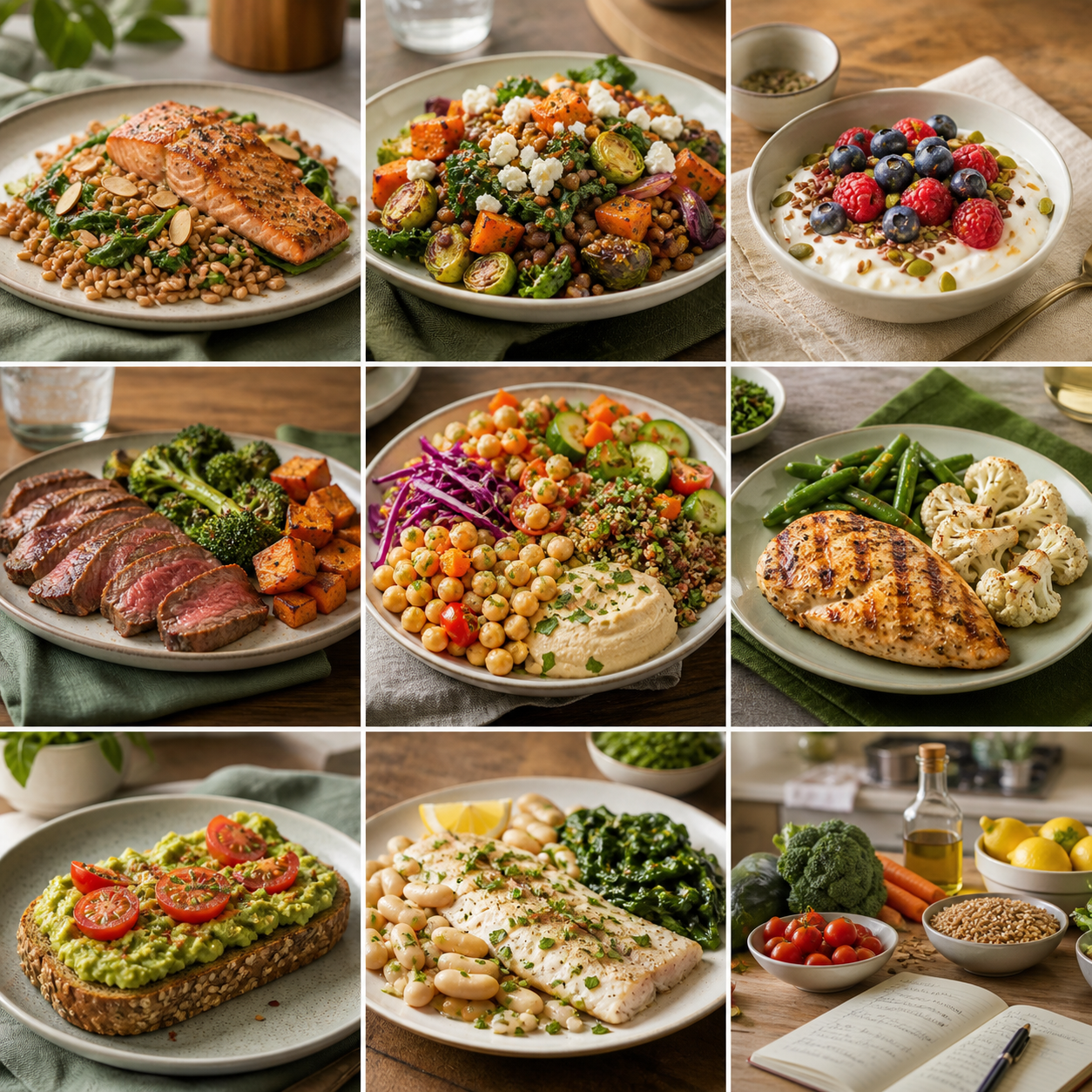
Ten small healthy eating habits covering planning, plants, protein, fiber, hydration, portions, labels, leftovers and flexibility. This guide offers general education, not individualized medical care. The right pattern depends on health history, medication, access, culture and what you can sustain.
Healthy eating improves when the system covers ordinary hunger, busy meals and imperfect weeks before motivation is required.
Habits one through three: plan, add and anchor
First, plan the meal most likely to disappear. Second, add one fruit or vegetable to a meal you already eat. Third, anchor main meals with a credible protein source. These actions make the abstract instruction to eat healthy physically observable.
The three habits can happen in one lunch: a prepared salmon bowl waiting in the refrigerator, an extra side of greens, and salmon plus beans supplying protein. The exact food can change while the structure remains useful.
Habits four and five: protect fiber and hydration
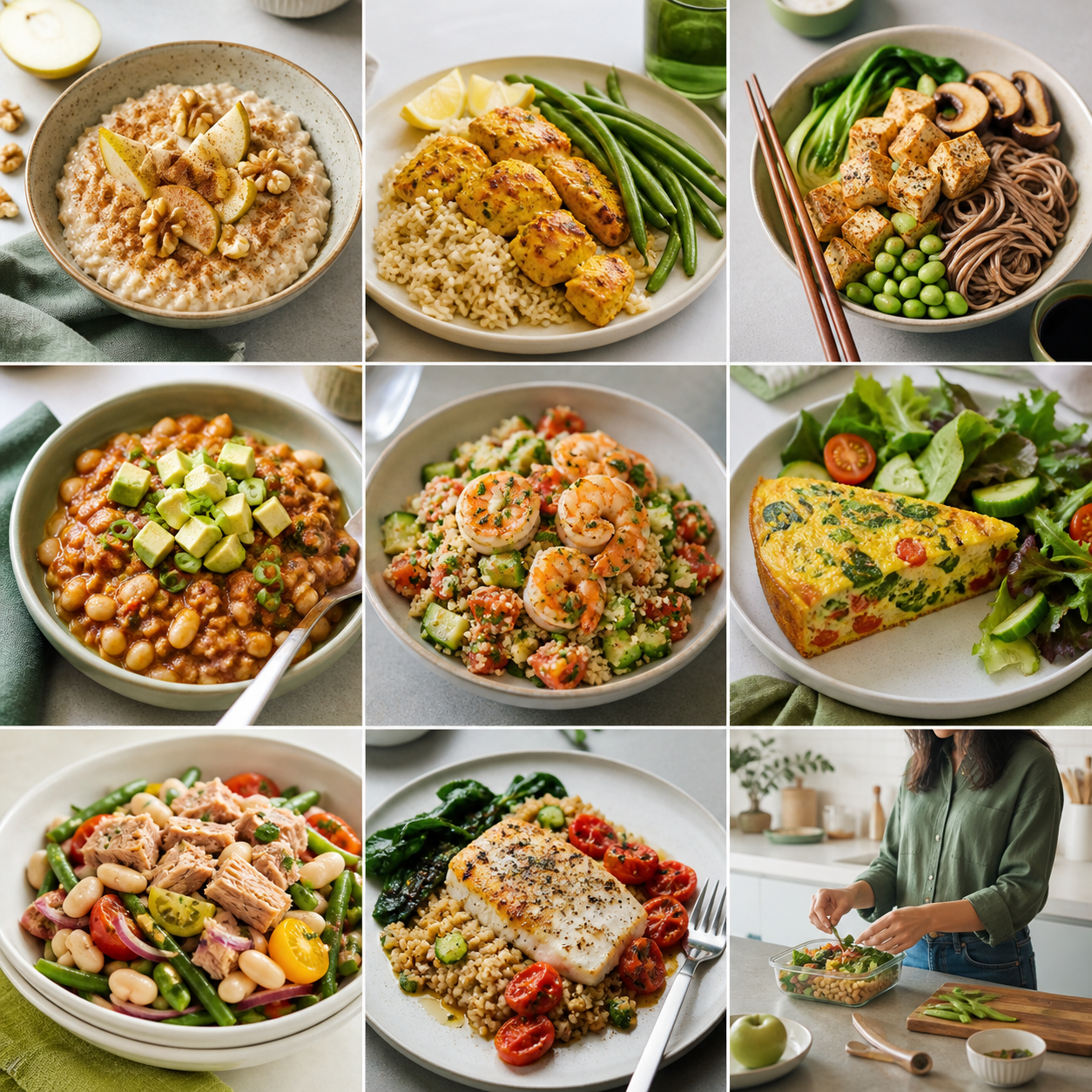
Fourth, pair protein with fiber from vegetables, fruit, legumes, whole grains, nuts or seeds. Fifth, keep water visible and available. Neither habit requires perfection or a special product.
Fiber often disappears in high-protein plans, while hydration is forgotten during long meetings. Put both into the environment: frozen vegetables beside the meals, fruit on the desk and a refillable bottle within reach.
Habits six through eight: portions, labels and leftovers
Sixth, plate food instead of eating from a large container when portions matter. Seventh, read the serving size and compare the nutrients relevant to your goals. Eighth, give leftovers a specific next use.
These habits reduce ambiguity. They make the amount visible, help distinguish two similar products and turn yesterday's dinner into today's lunch instead of Friday's waste.
Habits nine and ten: slow the start and review the week
Ninth, give the first few minutes of a meal your attention. Tenth, review the week without judgment. Notice hunger, satisfaction, cost, waste and which meals failed under time pressure.
Use the review to redesign, not punish. Keep one reliable emergency meal. Change an unrealistic recipe. Order fewer prepared meals if they expired, or more if they consistently replaced takeout. Improvement is a practical edit.
Our evidence approach
We prioritize whole dietary patterns, practical sustainability and meal-level information. For the public-health foundation of this guide, see American Heart Association ↗. Medical conditions and restrictive diets warrant individualized guidance.
Five useful questions
Frequently asked questions
What is the easiest healthy eating habit to start?+
Add one reliable plant food to a meal you already eat, such as berries at breakfast, beans at lunch or frozen vegetables at dinner. A small repeatable addition is easier to sustain than a complete reset.
How long does it take to build healthy eating habits?+
There is no universal deadline. Repetition, environment and the size of the change matter more than a fixed number of days. Track whether the behavior is becoming easier and more automatic over several weeks.
Can prepared meals support healthy habits?+
Yes. Prepared meals can reduce shopping, cooking and cleanup friction. Compare the exact ingredients, portion, sodium, protein, fiber and carbohydrates instead of relying only on a health claim.
Where can I buy balanced prepared meals?+
Prepared meal services and grocery prepared-food sections sell balanced options. Review the live nutrition label before ordering and choose the smallest useful quantity to avoid waste.
Do I need to count every calorie to eat well?+
Not necessarily. Many people can improve diet quality through regular meals, useful portions and more minimally processed foods. Calorie tracking may help some goals, but it is not required for everyone.