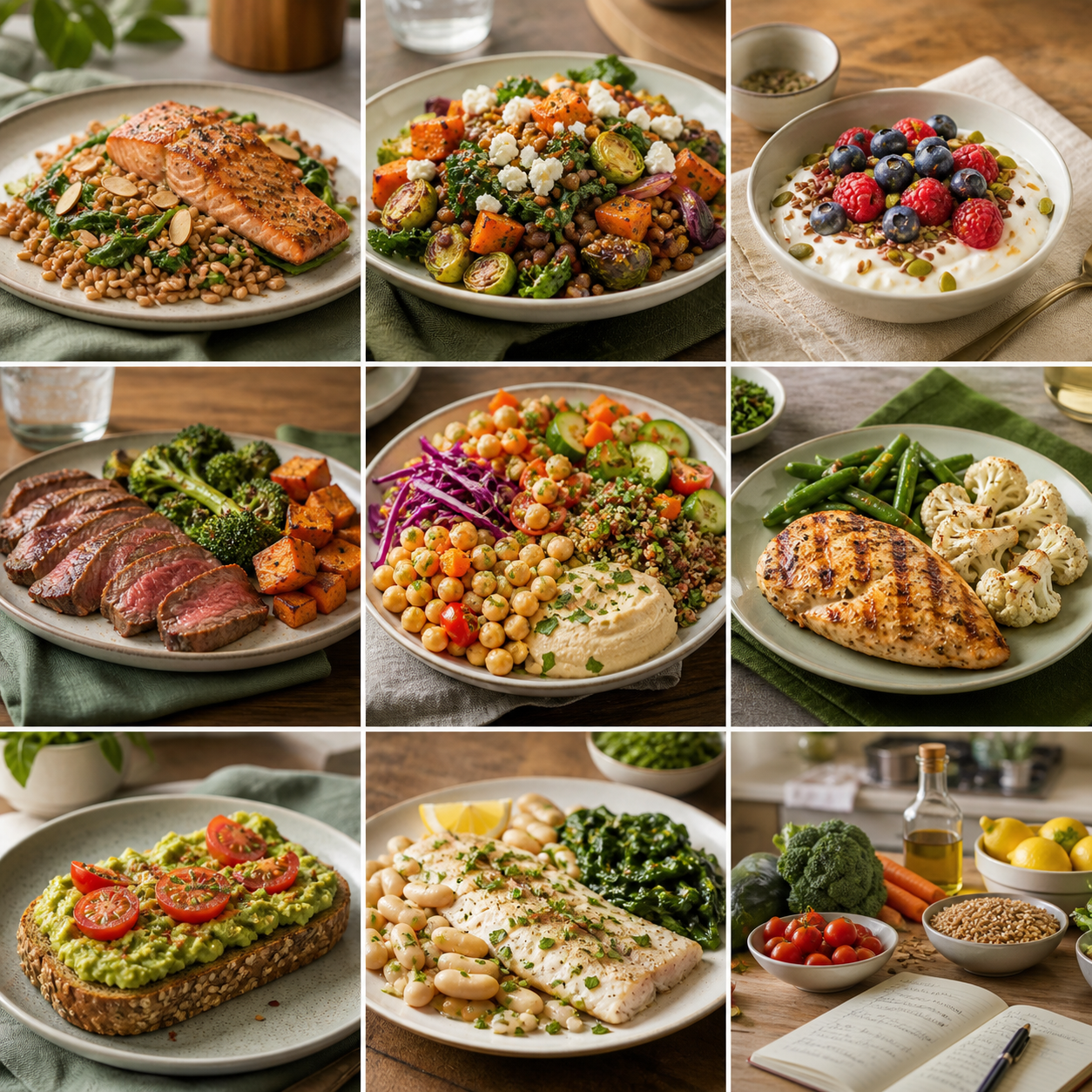
Build healthy eating habits around regular meals, practical portions, fiber, protein and a schedule you can actually repeat. This guide offers general education, not individualized medical care. The right pattern depends on health history, medication, access, culture and what you can sustain.
Design the environment, anchor the meal and make the next healthy choice easier than the last one.
Make the good choice the nearby choice
Healthy eating becomes easier when the environment does some of the work. Put fruit where you can see it, keep a protein and a vegetable ready for lunch, and place the food you want to eat more often at eye level. The goal is not to prove discipline. It is to reduce the number of decisions required on a busy day.
Choose one default meal for the moment when plans collapse. A useful default might be yogurt, berries and nuts, or a prepared chicken, grain and vegetable bowl. Repetition at the emergency meal does not prevent variety elsewhere. It protects the week from turning into a series of improvised takeout orders.
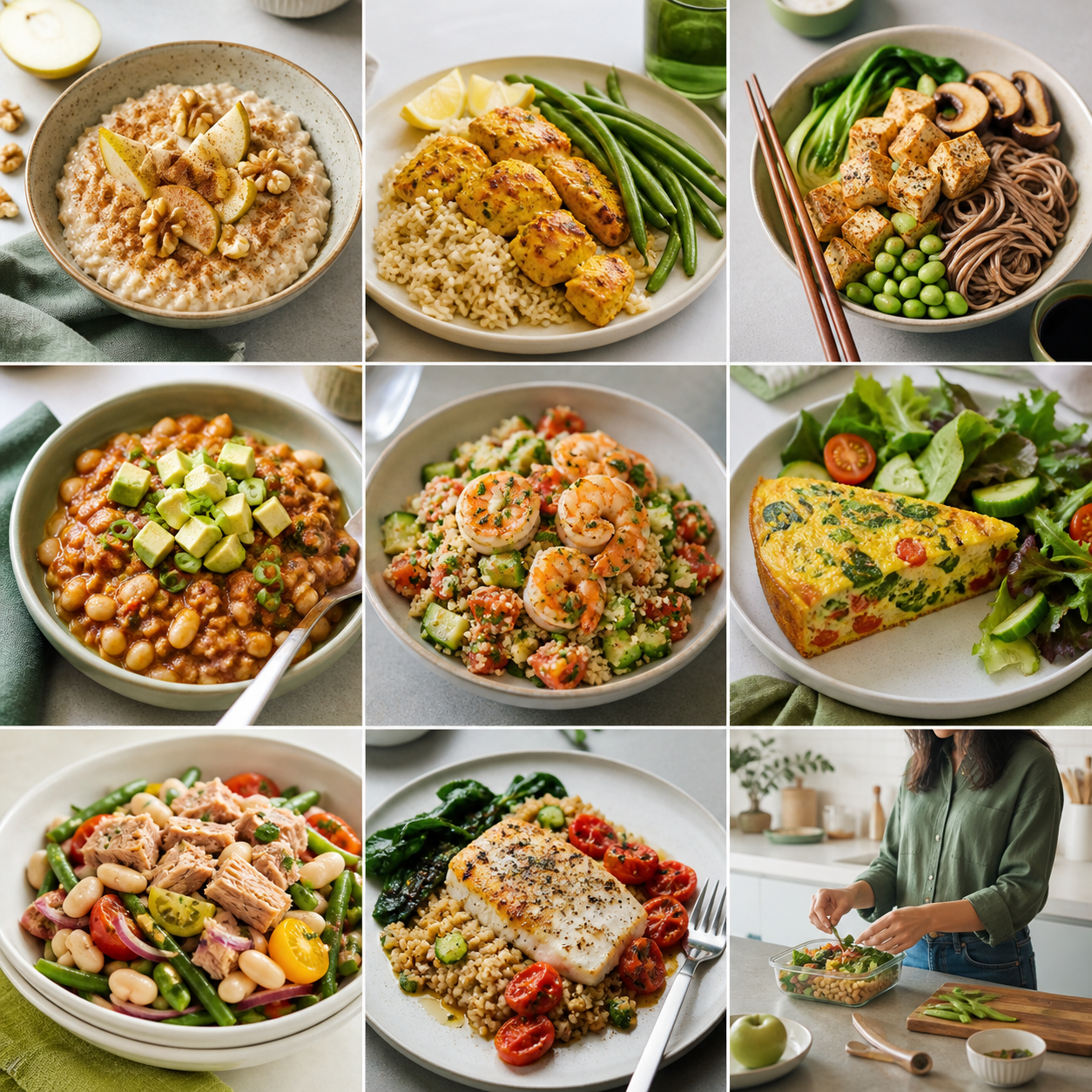
Build meals with anchors, not rules
Start with a protein source, a plant or two, and a carbohydrate that suits your appetite and activity. Add an unsaturated fat or flavorful sauce when it makes the meal more satisfying. This framework can describe lentil soup with whole-grain toast, salmon with farro and greens, or tofu with brown rice and vegetables.
An anchor is flexible. A rigid rule creates a pass-or-fail test. If lunch has fewer vegetables than planned, dinner can include more. If a restaurant portion is large, you can stop when comfortably satisfied. Healthy eating is the pattern created across time, not the moral value assigned to one plate.
Use regular meals to reduce emergency hunger
A long gap without food can make the fastest, largest option feel like the only option. Regular meals are not a command to eat by the clock. They are a planning tool. Notice the time of day when hunger usually overwhelms your intentions, then move a meal or substantial snack earlier.
A useful snack combines staying power with convenience: an apple and peanut butter, yogurt and seeds, hummus and vegetables, or cheese with fruit. The combination matters because satisfaction makes it easier to return to the day rather than search for another snack twenty minutes later.
Measure progress without chasing perfection
Track behaviors you can influence: how often lunch included a vegetable, how many evenings involved cooking or a balanced prepared meal, and whether grocery waste fell. Body weight, energy and laboratory values may matter, but daily behavior gives faster feedback about the system itself.
Review the week with curiosity. Keep what lowered friction. Change what required too much time, money or attention. If a plan produces guilt, secrecy or escalating restriction, step back and seek support. A healthy habit should expand your capacity to live, not shrink it.
Our evidence approach
We prioritize whole dietary patterns, practical sustainability and meal-level information. For the public-health foundation of this guide, see Dietary Guidelines for Americans ↗. Medical conditions and restrictive diets warrant individualized guidance.
Five useful questions
Frequently asked questions
What is the easiest healthy eating habit to start?+
Add one reliable plant food to a meal you already eat, such as berries at breakfast, beans at lunch or frozen vegetables at dinner. A small repeatable addition is easier to sustain than a complete reset.
How long does it take to build healthy eating habits?+
There is no universal deadline. Repetition, environment and the size of the change matter more than a fixed number of days. Track whether the behavior is becoming easier and more automatic over several weeks.
Can prepared meals support healthy habits?+
Yes. Prepared meals can reduce shopping, cooking and cleanup friction. Compare the exact ingredients, portion, sodium, protein, fiber and carbohydrates instead of relying only on a health claim.
Where can I buy balanced prepared meals?+
Prepared meal services and grocery prepared-food sections sell balanced options. Review the live nutrition label before ordering and choose the smallest useful quantity to avoid waste.
Do I need to count every calorie to eat well?+
Not necessarily. Many people can improve diet quality through regular meals, useful portions and more minimally processed foods. Calorie tracking may help some goals, but it is not required for everyone.