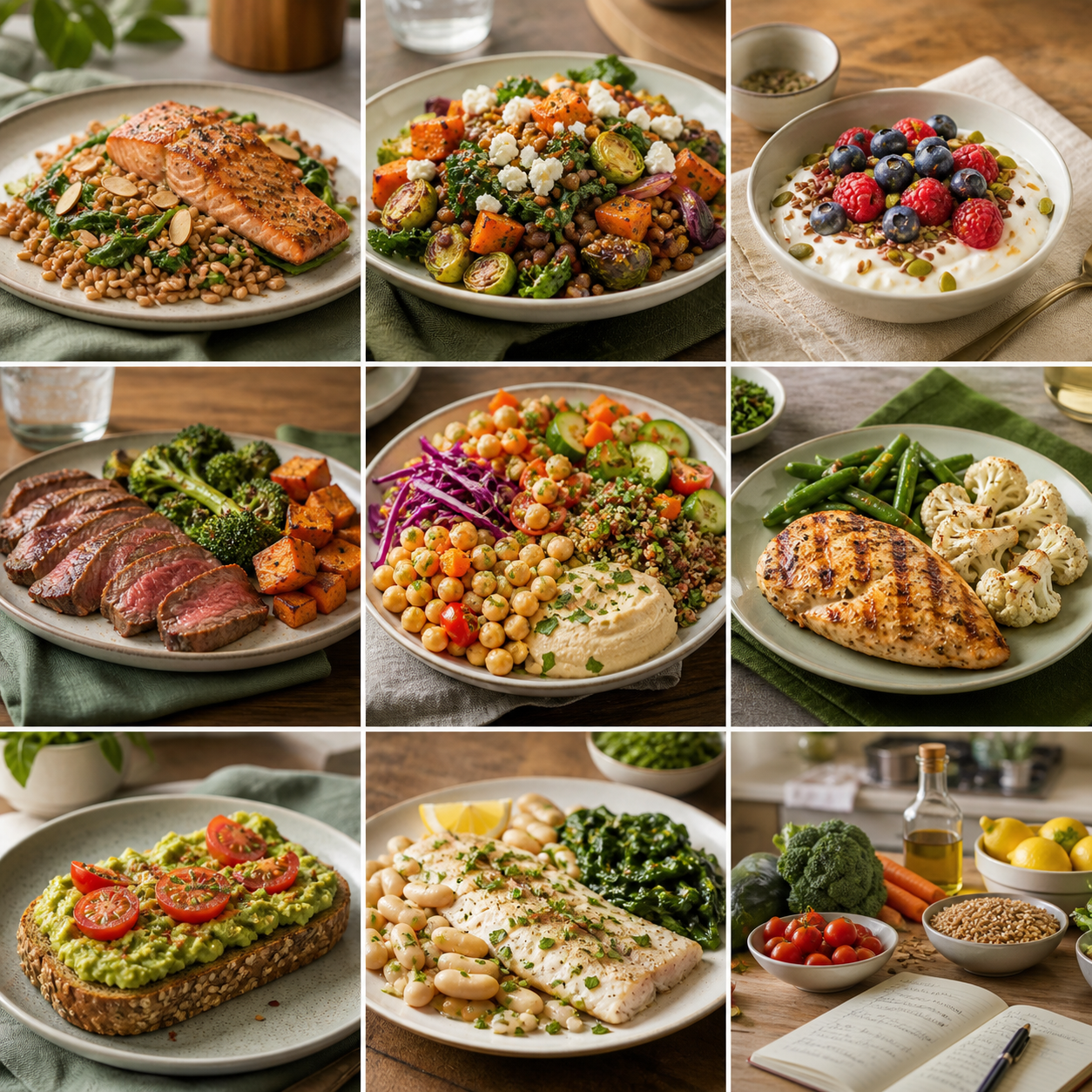
Build a heart-healthy eating pattern with vegetables, whole grains, beans, fish, unsaturated fats and informed sodium choices. This guide offers general education, not individualized medical care. The right pattern depends on health history, medication, access, culture and what you can sustain.
Prioritize plants, whole grains and healthy proteins, replace saturated fat with unsaturated fat, and compare sodium meal by meal.
Build the pattern before chasing a superfood
The American Heart Association emphasizes vegetables, fruits, whole grains, healthy protein sources and unsaturated fats. That can become oats with berries and walnuts, bean soup with whole-grain bread, or fish with farro and vegetables. The combinations matter more than finding one heroic ingredient.
Variety distributes nutrients and keeps the pattern enjoyable. Rotate legumes, fish, poultry and plant proteins. Use olive oil, nuts, seeds and avocado in place of some sources of saturated fat. Keep minimally processed staples available so the convenient option can still support the goal.
Treat sodium as a daily budget
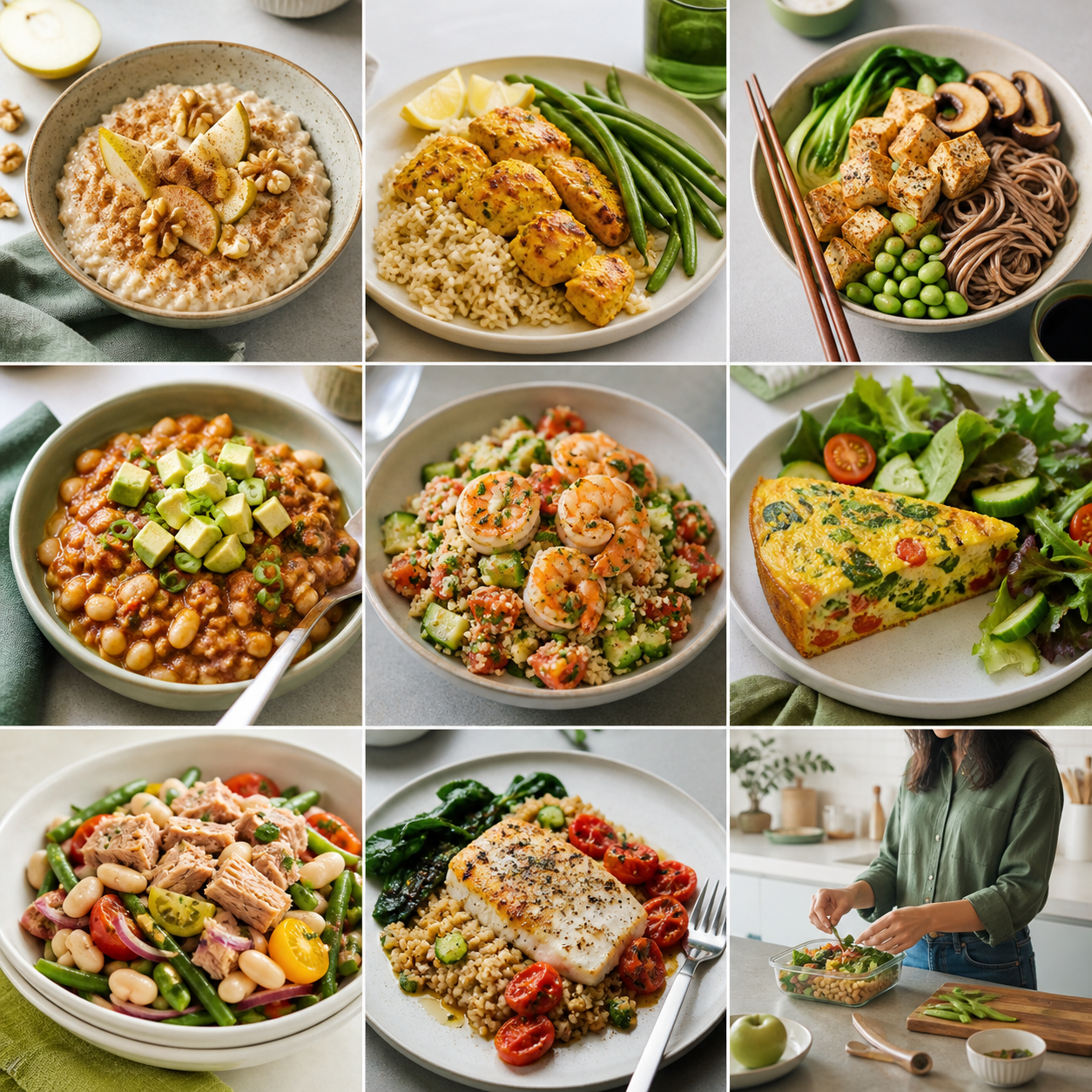
Prepared and restaurant foods contribute much of the sodium people eat, so the label deserves attention even when a meal looks balanced. Compare similar meals, note serving size and consider what the rest of the day contains. Lower-sodium choices at several meals can matter more than avoiding the salt shaker alone.
Flavor does not need to disappear. Citrus, vinegar, garlic, herbs, spices and toasted aromatics make food vivid. If you have heart failure, kidney disease, high blood pressure or a prescribed sodium target, follow your care team's advice rather than a generic internet number.
Understand fat by replacement
The useful question is not whether a food contains fat. It is what kind of fat and what it replaces. Swapping butter, fatty processed meat or tropical oils for olive oil, nuts, seeds, fish or avocado can improve the overall pattern. Simply removing fat may reduce satisfaction without improving diet quality.
Read saturated fat alongside the ingredient list. A plant-based label does not automatically mean low saturated fat, and a protein-forward meal can still be built around fish, beans or lean poultry rather than the fattiest meat available.
Use convenience without losing control
A heart-conscious prepared meal should make sodium, saturated fat, calories and portion visible. Look for vegetables and legumes, not only a large protein number. When one meal is higher in sodium, build the rest of the day around less processed food and follow any clinician-set target.
A service can reduce takeout and food waste, but it does not outsource judgment. Compare individual dishes, rotate proteins and use prepared food as one component of a broader pattern that also includes breakfast, snacks and meals away from home.
Our evidence approach
We prioritize whole dietary patterns, practical sustainability and meal-level information. For the public-health foundation of this guide, see American Heart Association ↗. Medical conditions and restrictive diets warrant individualized guidance.
Five useful questions
Frequently asked questions
What foods are part of a heart-healthy diet?+
Vegetables, fruits, whole grains, beans, fish, nuts, seeds, lean proteins and unsaturated oils can all contribute. The overall pattern and what foods replace are more important than one superfood.
How much sodium should a heart-healthy meal contain?+
Needs vary. The American Heart Association recommends no more than 2,300 mg daily for most adults and an ideal limit of 1,500 mg for many, but individual clinical targets may differ. Compare labels and ask your care team.
Can prepared meals be heart healthy?+
Yes, when selected carefully. Compare sodium, saturated fat, vegetables, fiber and portion on the exact meal rather than relying on a broad wellness category.
Where can I order heart-conscious prepared meals?+
Prepared meal services offer meals with visible nutrition information. Search the current menu, compare labels across several dishes and confirm whether the service delivers to your ZIP code.
Is a low-fat diet always best for heart health?+
No. Unsaturated fats from foods such as nuts, seeds, fish, avocado and liquid plant oils can support a heart-healthy pattern when they replace saturated fats.