
Choose a sustainable weight-loss diet with satisfying meals, adequate protein and fiber, realistic portions and less decision fatigue. This guide offers general education, not individualized medical care. The right pattern depends on health history, medication, access, culture and what you can sustain.
Create a modest, sustainable calorie gap with meals that protect satisfaction, nutrient adequacy and your ability to keep going.
Choose a pattern you can maintain
NIDDK emphasizes a healthy eating plan that can be maintained over time. That may be Mediterranean-style, lower-carb, vegetarian or simply a structured version of the food you already enjoy. The mechanism matters, but adherence determines whether it becomes useful outside a short trial.
Start by identifying the calories that add little satisfaction: frequent sugary drinks, routine alcohol, oversized extras or unplanned restaurant orders. Reducing those may create space without shrinking every meal into a diet product.
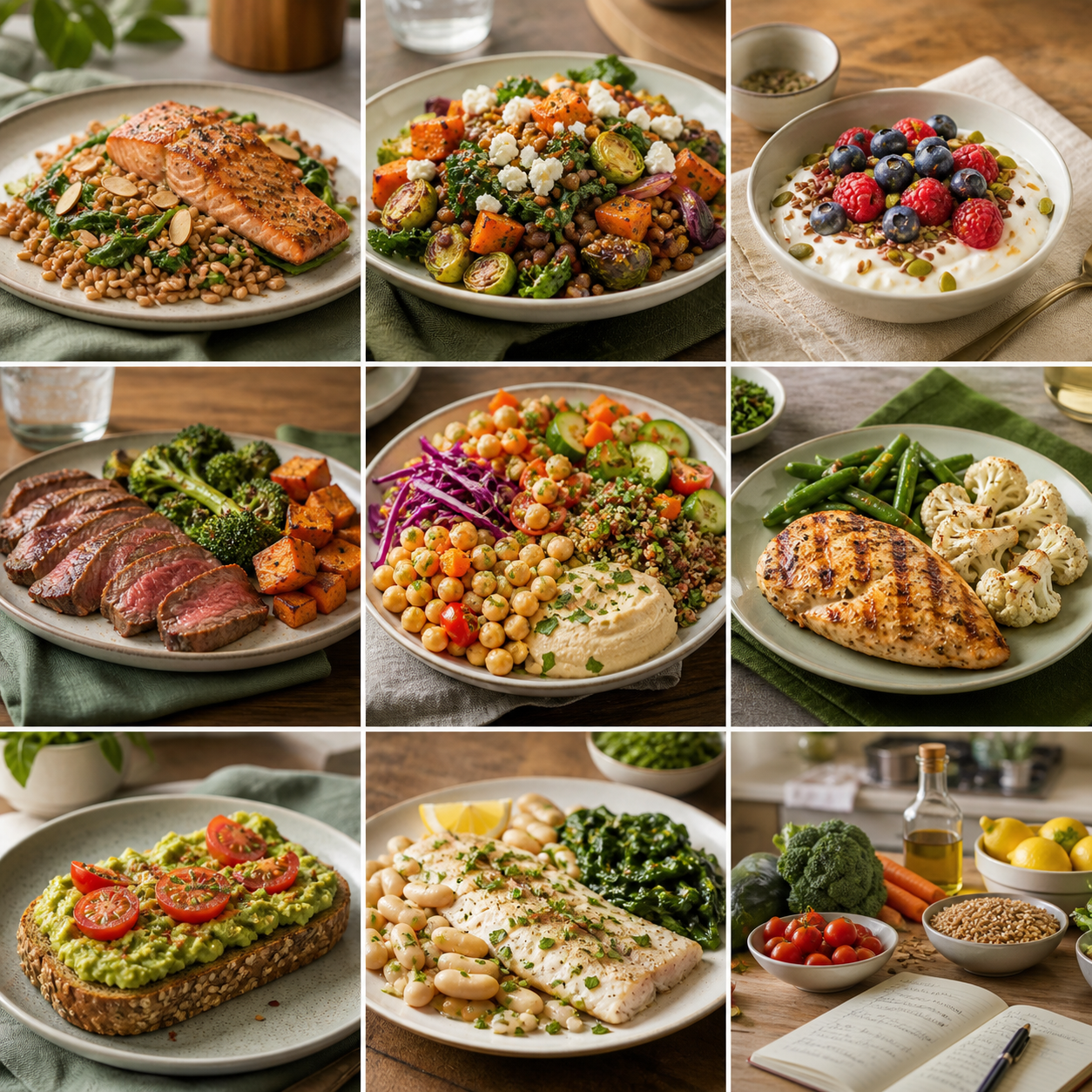
Use protein and fiber for satisfaction
Protein and fiber can make a lower-calorie pattern more satisfying. Build meals around foods such as fish, poultry, eggs, yogurt, tofu, beans or lentils, then add vegetables, fruit and fiber-rich carbohydrates. Fat also contributes flavor and satisfaction; portion it rather than treating it as forbidden.
Volume helps when it comes from food you enjoy. Soup, vegetables, fruit and legumes can expand a meal, but the plan should still include enough energy to support work, movement and sleep. Persistent fatigue or preoccupation with food is a reason to reassess.
Make portions visible without obsession
Prepared meals, divided leftovers and planned snacks can make portions easier to see. You do not need to weigh every lettuce leaf. Use repeatable serving tools for energy-dense foods and observe how the full meal affects hunger over the following hours.
Scale weight naturally fluctuates with water, sodium, digestion and menstrual cycles. Review trends rather than reacting to one morning. Behavioral measures such as meal planning, vegetable intake and reduced takeout offer useful feedback even when the scale is noisy.
Know when general advice is not enough
Weight is influenced by sleep, medication, medical conditions, genetics, stress and environment as well as food and activity. If weight changes unexpectedly or progress is unusually difficult, discuss it with a clinician rather than responding with escalating restriction.
People with a history of disordered eating, adolescents, pregnant people and those managing significant medical conditions need individualized guidance. A responsible plan should improve health without turning eating into a daily test of worth.
Our evidence approach
We prioritize whole dietary patterns, practical sustainability and meal-level information. For the public-health foundation of this guide, see NIDDK ↗. Medical conditions and restrictive diets warrant individualized guidance.
Five useful questions
Frequently asked questions
What is the healthiest diet to lose weight?+
The healthiest option is nutritionally adequate, creates a sustainable calorie deficit and fits your preferences and medical needs. Mediterranean-style, lower-carb and other patterns can work when maintained over time.
Do I need to cut carbohydrates to lose weight?+
No. Weight loss can occur with different carbohydrate levels. Choose a level that supports satisfaction, activity and nutrient intake, and emphasize fiber-rich sources when carbohydrates are included.
Are prepared meals useful for weight loss?+
They can make portions and calories visible and reduce takeout decisions. Compare protein, fiber, vegetables, sodium and total energy instead of choosing only the lowest-calorie meal.
Where can I buy prepared weight-loss meals?+
Many prepared meal services offer calorie-conscious or lower-carb filters. Verify each current label and delivered price, and choose meals you will actually eat.
How fast should I lose weight?+
A clinician can help set an appropriate pace. Rapid loss is not automatically better and may be difficult to sustain. Seek care for unexpected weight change or concerning symptoms.