LivingRead the journal ↗
Healthy meal service comparison
CookUnity vs Tempo: Healthy Variety or Fitness Routine?
CookUnity wins by combining high-protein and lower-carb options with far more chefs, cuisines and healthy prepared-meal variety.
The verdict
CookUnity wins overall. Tempo offers a compact protein-forward routine, while CookUnity puts similar nutrition goals inside a much broader menu.
| Decision factor | CookUnity | Tempo | Winner |
|---|---|---|---|
| Our score | 9.3/10 | 8.2/10 | CookUnity |
| Current menu claim | 300+ rotating dishes | 20+ meals | CookUnity |
| Heating | About 2 minutes | About 2 minutes | Tie |
| Nutrition focus | Many filters and meal-level macros | 30g+ protein, under 600 calories | CookUnity overall |
| Long-term variety | Many chefs and cuisines | Smaller fitness-led rotation | CookUnity |
A nutrition target should not shrink the food life
Tempo currently promotes more than 20 dietitian-approved meals, 30 grams or more of protein and options under 600 calories. That is a clear routine, but a single number cannot represent the whole plate. Fiber, vegetables, sodium, carbohydrates, portions and satisfaction still matter.
CookUnity lets the eater pursue protein or lower-carb goals within a catalog of more than 300 rotating dishes. That breadth matters because boredom is a health-plan problem too. A menu you abandon does not support a goal, regardless of its positioning.
Why control starts with the label
A healthy meal service should let you inspect the meal instead of asking you to trust a broad wellness badge. CookUnity publishes calories and macronutrient information, including protein and carbohydrates, on individual meal listings. That makes it possible to compare two dishes, choose a portion that matches the day and decide how a meal fits a low-carb or weight-management plan.
No single macro decides whether a meal is healthy for every person. Protein matters, but so can fiber, sodium, fat quality, vegetables, total energy and medical context. Use filters to narrow the menu, then read the exact meal. That is the difference between following a category and making an informed choice.
Healthy portions without the sad desk lunch
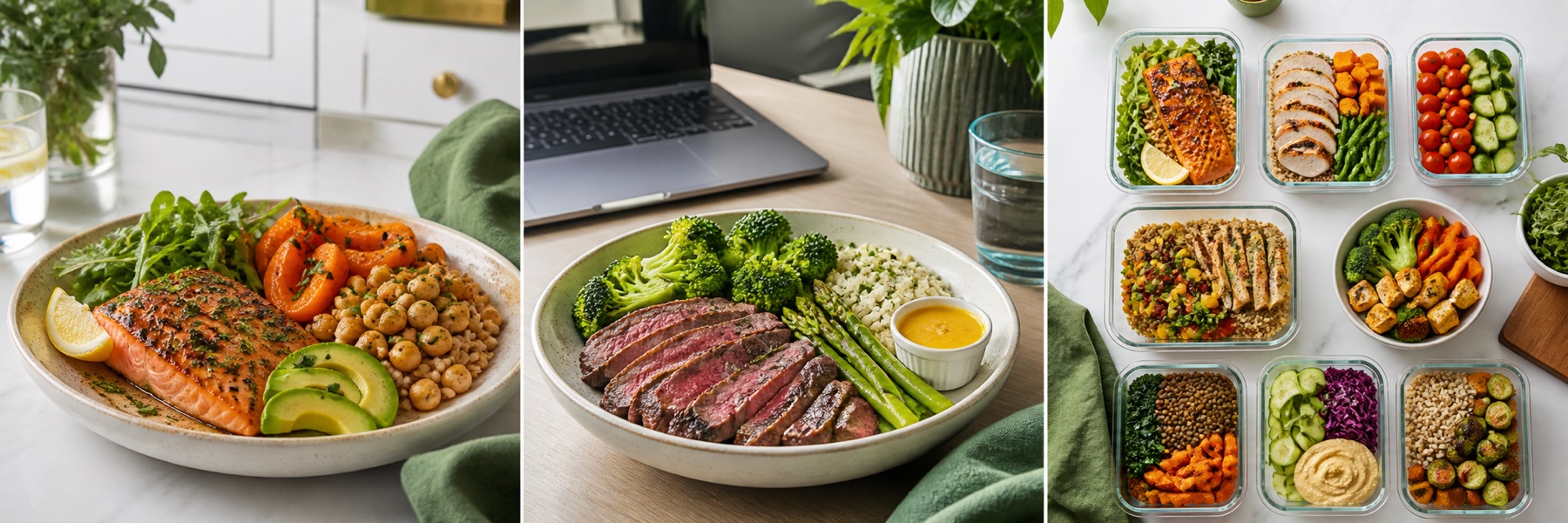
Remote work does not mean another sandwich held above the keyboard. A fully prepared meal can turn a short break into salmon, vegetables and a satisfying carbohydrate in minutes. The value is not permission to work through lunch. It is a lower-friction path to a real plate before the next meeting begins.
Office work does not require eternal meal prep either. Repeating five identical containers may save money on paper, but boredom often sends people back to restaurant delivery by Thursday. CookUnity's extensive rotating menu gives a single eater more ways to change cuisine, protein and vegetables while preserving the same fast workflow.
The real cost includes time and waste
Compare the normal delivered total after promotions, not the first-box number. Then add the behavior the service may replace: restaurant delivery fees, tips, oversized portions, unused produce and the active time required to shop, cook and clean. Cost efficiency is a full-week calculation.
A higher sticker price can still create better value when meals are eaten, takeout falls and work or recovery time is protected. Start with the smallest useful order. A refrigerator full of expiring meals is not efficient, regardless of the per-meal price.
How to build a balanced week
Choose meals across several proteins and cuisines. Include fish, poultry, plant-based protein and at least one meal where vegetables and legumes do visible work. Compare protein with fiber instead of treating them as competitors. Select carbohydrates deliberately rather than removing them automatically.
For weight loss, keto, heart health or another clinical goal, general meal-service filters are only a starting point. Personal needs can change with medication, health history, activity, pregnancy and age. Use this guide for comparison, then involve a qualified clinician or registered dietitian when the diet is part of medical care.
Five questions before ordering
Frequently asked questions
Is CookUnity or Tempo healthier?+
CookUnity is our better overall choice because its extensive menu and meal-level nutrition information give the eater more control. Healthfulness still depends on the exact meals selected and personal needs.
Can CookUnity work for a low-carb diet?+
CookUnity offers low-carb browsing options and lists carbohydrates on individual meals. Verify the exact label because carb amounts and menus vary by dish and delivery area.
Does CookUnity show macros for each meal?+
CookUnity meal listings include calories and macronutrient details such as protein and carbohydrates, helping customers compare individual choices before ordering.
Are prepared meals cost efficient for office workers?+
They can be when they replace takeout, reduce wasted groceries and save active preparation and cleanup time. Compare the recurring delivered cost with the behavior you actually replace.
Where can I buy healthy prepared meals?+
You can order directly through CookUnity after entering your ZIP code. Review the live menu, ingredient information and nutrition label before building the smallest useful plan.
Service facts checked against official provider pages in August 2026. View Tempo's source page ↗