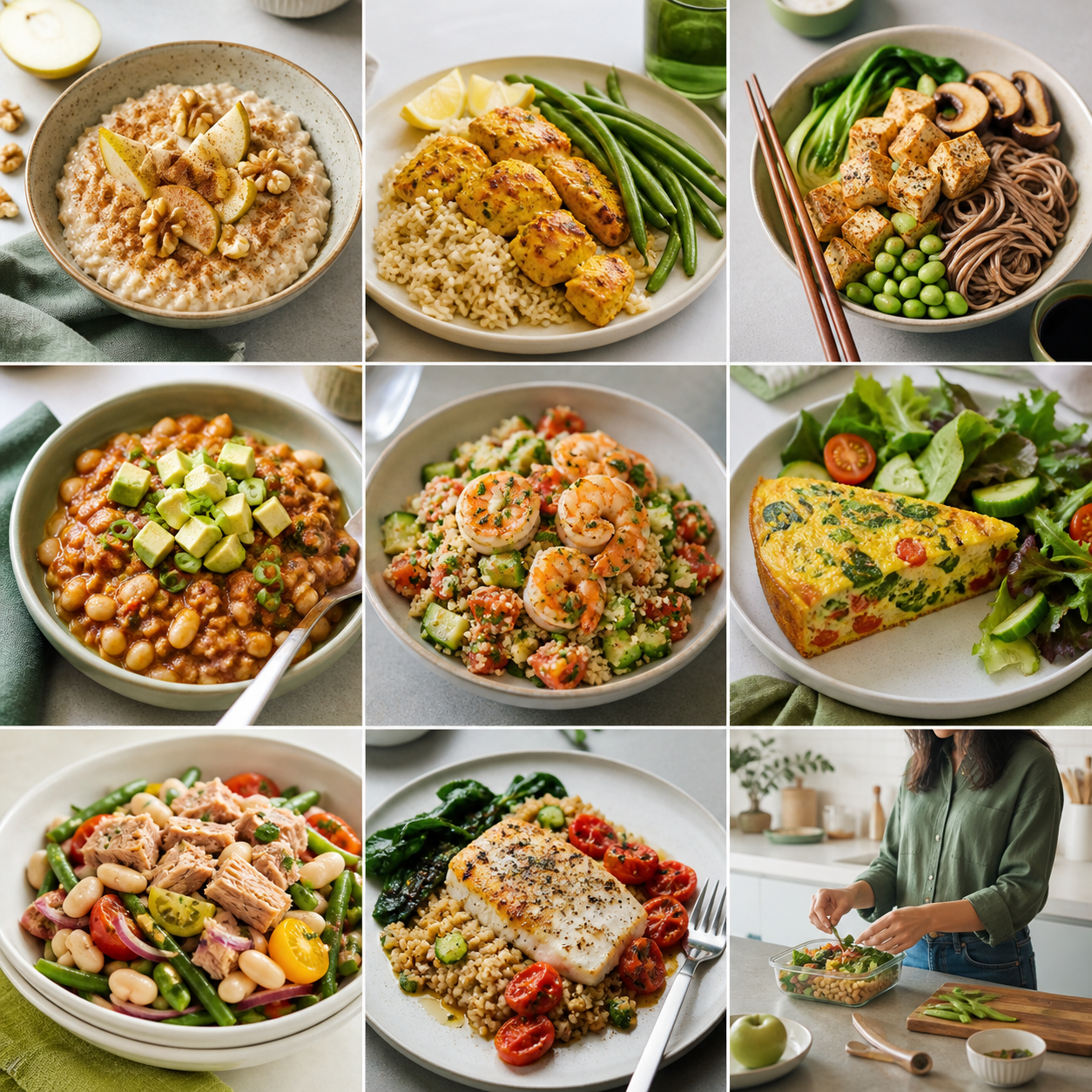
A practical guide to healthy diets for women, including protein, fiber, iron, calcium, pregnancy and menopause considerations. This guide offers general education, not individualized medical care. The right pattern depends on health history, medication, access, culture and what you can sustain.
Start with a varied pattern, then personalize iron, calcium, energy and other needs to life stage and medical context.
Begin with adequacy, not subtraction
A useful pattern includes vegetables, fruit, fiber-rich carbohydrates, protein and sources of unsaturated fat. Restrictive plans can make it harder to obtain iron, calcium, vitamin D, folate and sufficient energy, especially when several food groups disappear at once.
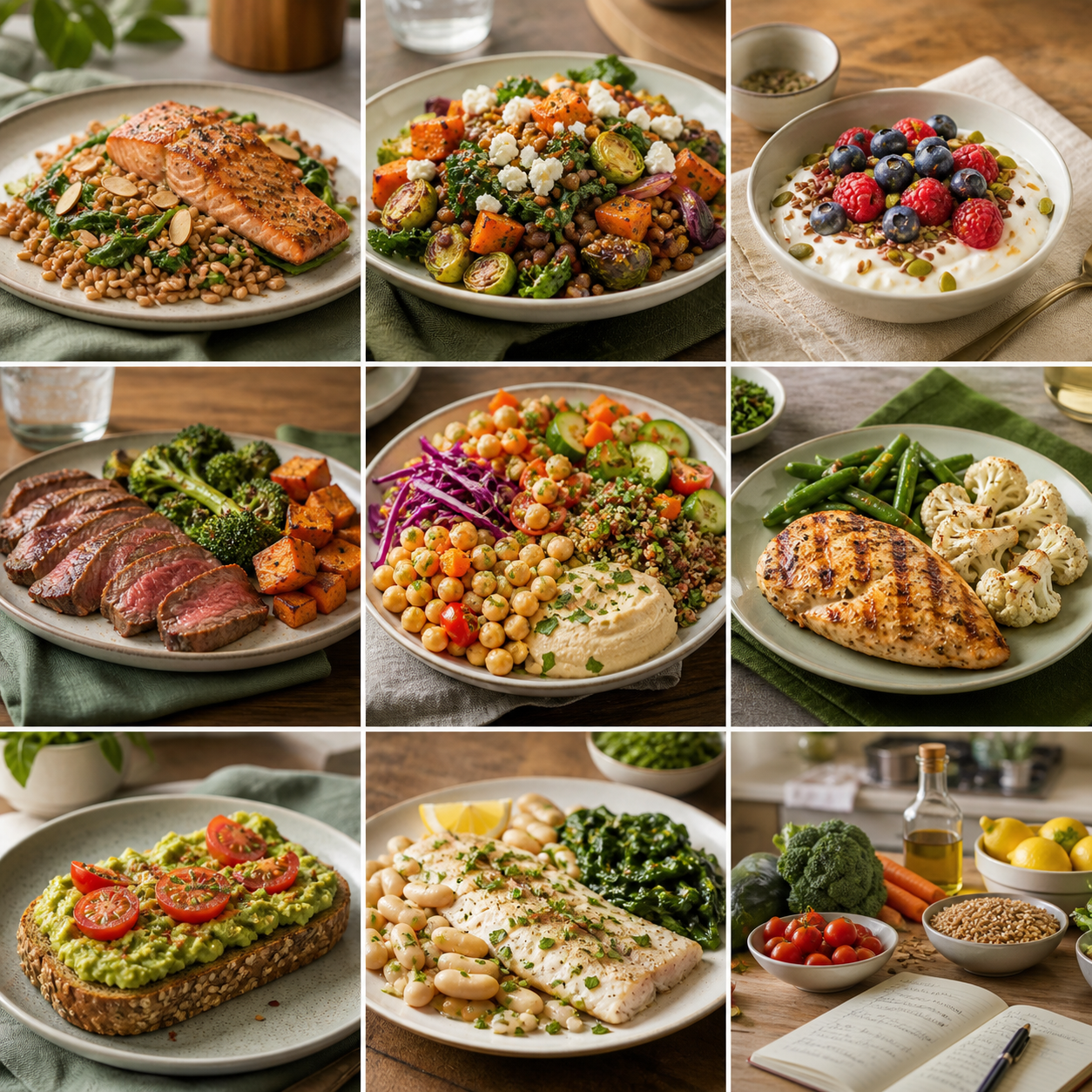
Build regular meals before fine-tuning. Greek yogurt with berries and seeds, lentils with vegetables and grains, or salmon with potatoes and greens each offers a different route to adequacy. Variety is a practical form of nutritional insurance.
Iron and calcium deserve context
People who menstruate may need to pay closer attention to iron, particularly with heavy periods or a plant-based diet. Iron-rich foods include meat, seafood, legumes and fortified foods. Vitamin C-rich foods can help with absorption of non-heme iron from plants.
Calcium needs also deserve attention, especially when dairy is excluded. Dairy foods and fortified alternatives can help, but product nutrition varies. A clinician can evaluate symptoms or laboratory concerns; do not self-treat suspected deficiency with high-dose supplements.
Pregnancy and menopause change the questions
Pregnancy and lactation involve specific nutrient and food-safety guidance that cannot be reduced to eating more. Prenatal care should guide folic acid, iron, iodine, seafood choices and supplements. Weight-loss advice from a general blog is not a substitute for that care.
Around menopause, cardiovascular and bone health often move higher on the priority list. Strength training, adequate protein, calcium-rich foods, fiber and an overall heart-healthy pattern can all matter. The exact energy intake should respond to appetite, activity and health status rather than an age-based stereotype.
Choose services meal by meal
A women's wellness category does not tell you whether a specific meal fits. Read calories, protein, fiber, carbohydrates, sodium and ingredients. Choose enough food to support the day rather than treating the lowest-calorie dish as automatically superior.
Prepared meals can return time during demanding seasons. Pair them with simple breakfasts and snacks, rotate protein sources, and use any saved time for sleep, movement or something that makes the week more livable.
Our evidence approach
We prioritize whole dietary patterns, practical sustainability and meal-level information. For the public-health foundation of this guide, see Office on Women's Health ↗. Medical conditions and restrictive diets warrant individualized guidance.
Five useful questions
Frequently asked questions
What is a healthy diet for women?+
A varied pattern with vegetables, fruit, fiber-rich carbohydrates, adequate protein and unsaturated fats is a strong base. Iron, calcium, vitamin D, folate and energy needs should be personalized to life stage and health.
Do women need more iron than men?+
Many menstruating women have higher iron needs than adult men. Needs change after menopause and with pregnancy. A clinician can assess possible deficiency and recommend appropriate testing or treatment.
What should women eat during menopause?+
A heart-healthy pattern with vegetables, fruit, whole grains, legumes, useful protein and unsaturated fats is a practical base. Calcium-rich foods and resistance exercise can also support bone health.
Can women use prepared meal services for weight loss?+
Prepared meals can make portions and nutrition visible, but weight loss still requires a sustainable overall pattern. Avoid choosing solely by the lowest calorie count, and seek individualized care when appropriate.
Where can I buy balanced meals for a busy week?+
Prepared meal services and supermarkets sell ready-to-heat meals. Compare the exact label, ingredients and delivered price, then order only enough to cover the meals that normally create friction.