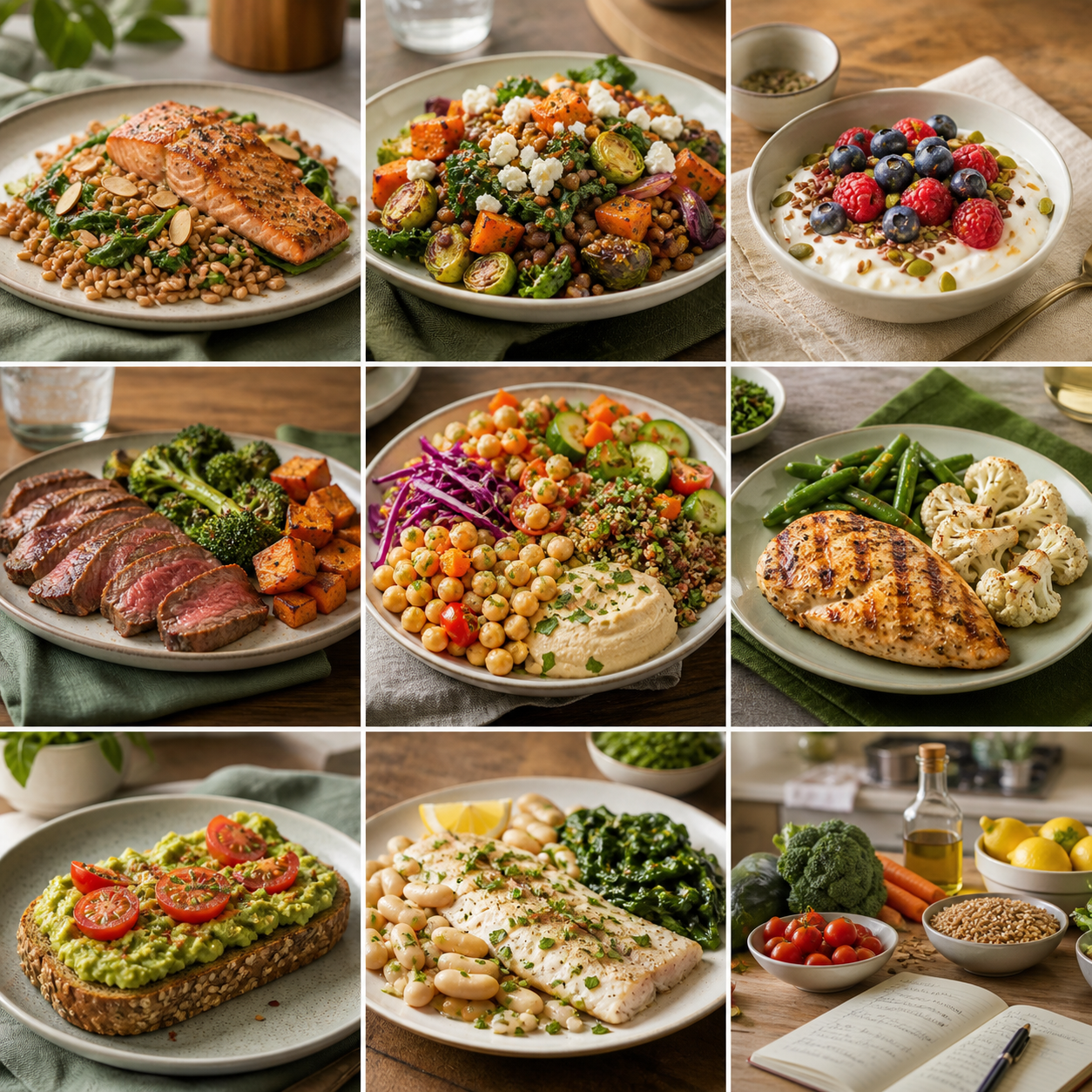
A realistic set of eating habits to support weight loss through meal structure, food environment and satisfying portions. This guide offers general education, not individualized medical care. The right pattern depends on health history, medication, access, culture and what you can sustain.
Shape the food environment, plan for hunger and change the repeatable week before optimizing exceptions.
Change the repeatable week
Look at the five or six meals that repeat most often. Improving those meals changes more of the month than perfecting a rare celebration. Choose a breakfast with protein and fiber, cover vulnerable lunches and create two fast dinner defaults.
Keep the ingredients or prepared meals physically available. Intention cannot compete with an empty refrigerator at eight in the evening. Availability is part of the intervention.
Plan for hunger instead of arguing with it
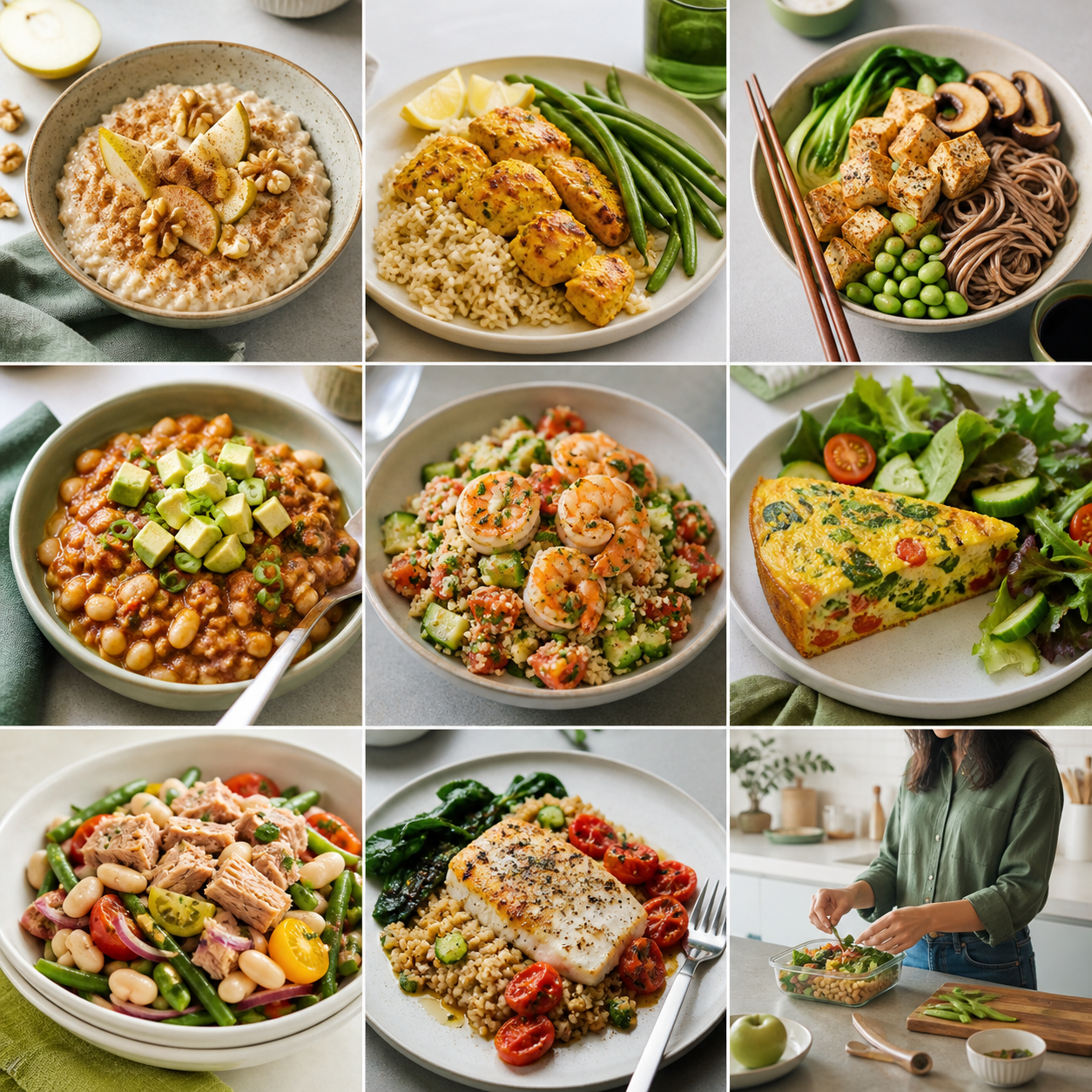
Hunger is not a character flaw. A sustainable plan anticipates it with satisfying meals and useful snacks. If afternoons consistently unravel, increase lunch protein, fiber or total energy and place a planned snack before the usual crash.
Very low-calorie days may appear effective in the short term but can make later intake harder to regulate. Aim for consistency and discuss an appropriate calorie target with a professional when personal guidance is needed.
Use higher-calorie foods deliberately
Nuts, oils, cheese, sauces and restaurant extras can fit, but their portions deserve visibility when weight loss is a goal. Measure once to learn what a typical portion looks like, then use that knowledge without turning every meal into laboratory work.
Do not remove all fat. Unsaturated fats add flavor and help meals feel complete. Use a portion that supports the overall day and pair it with vegetables, protein and fiber-rich food.
Keep exceptions from becoming exits
A larger meal does not erase the pattern. Return to the next planned meal without compensation or punishment. This prevents one event from becoming several days of all-or-nothing behavior.
The same principle applies to travel and deadlines. Use a simpler version of the plan: a supermarket bowl, prepared meal or restaurant plate with visible protein and vegetables. Maintenance under pressure is a meaningful success.
Our evidence approach
We prioritize whole dietary patterns, practical sustainability and meal-level information. For the public-health foundation of this guide, see NIDDK ↗. Medical conditions and restrictive diets warrant individualized guidance.
Five useful questions
Frequently asked questions
What is the easiest healthy eating habit to start?+
Add one reliable plant food to a meal you already eat, such as berries at breakfast, beans at lunch or frozen vegetables at dinner. A small repeatable addition is easier to sustain than a complete reset.
How long does it take to build healthy eating habits?+
There is no universal deadline. Repetition, environment and the size of the change matter more than a fixed number of days. Track whether the behavior is becoming easier and more automatic over several weeks.
Can prepared meals support healthy habits?+
Yes. Prepared meals can reduce shopping, cooking and cleanup friction. Compare the exact ingredients, portion, sodium, protein, fiber and carbohydrates instead of relying only on a health claim.
Where can I buy balanced prepared meals?+
Prepared meal services and grocery prepared-food sections sell balanced options. Review the live nutrition label before ordering and choose the smallest useful quantity to avoid waste.
Do I need to count every calorie to eat well?+
Not necessarily. Many people can improve diet quality through regular meals, useful portions and more minimally processed foods. Calorie tracking may help some goals, but it is not required for everyone.