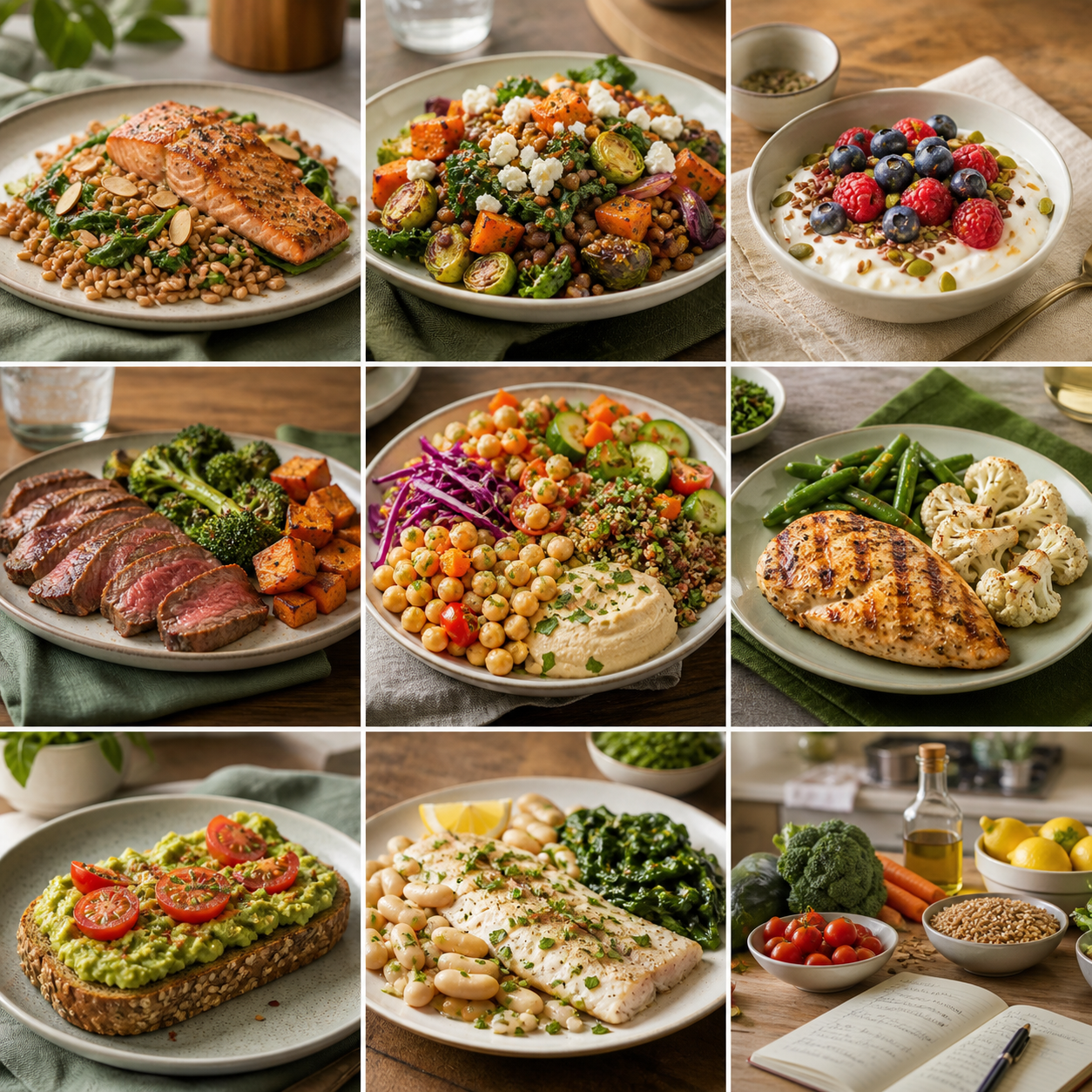
Seven concrete healthy eating habits for better meals, less food waste and a week that does not depend on perfect motivation. This guide offers general education, not individualized medical care. The right pattern depends on health history, medication, access, culture and what you can sustain.
Plan one meal, add plants, pair protein with fiber, keep water nearby, read labels, use leftovers and review the week.
Habits one and two: plan one meal and add one plant
Plan the meal that most often goes wrong, not the entire week. If lunch disappears between calls, cover three lunches with leftovers, prepared meals or a reliable grocery option. Planning one friction point offers more value than designing a perfect menu you cannot execute.
Add a fruit or vegetable to a meal you already eat. Put berries into breakfast, beans into soup or frozen vegetables beside dinner. Addition creates an immediate behavior and avoids the vague instruction to simply eat better.
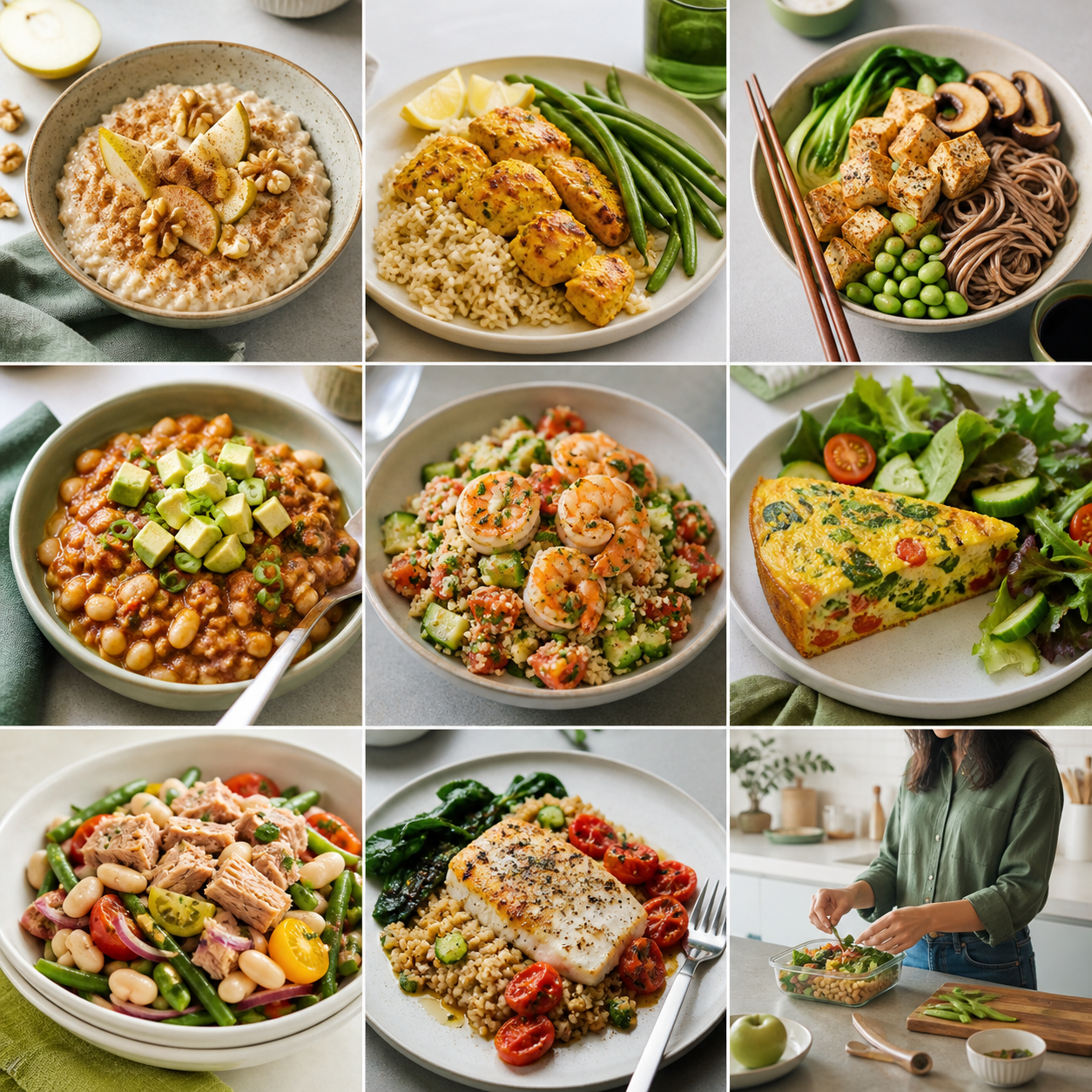
Habits three and four: pair protein with fiber and keep water visible
Protein and fiber work well together. Try yogurt with berries and seeds, fish with beans and greens, or chicken with brown rice and vegetables. This combination helps a meal feel complete and prevents protein goals from crowding plants off the plate.
Keep water visible and easy to refill. Hydration needs vary, and food contributes water too, but an available bottle or glass reduces the chance that every break becomes a sweet drink or another coffee.
Habits five and six: read labels and make leftovers intentional
Compare products using the serving size, ingredient list and nutrients relevant to you. Sodium, saturated fat, added sugar, protein, fiber and carbohydrates can each matter, but not every number needs equal attention for every person.
Give leftovers a plan before putting them away. Label the container, place it at eye level and decide whether it becomes tomorrow's lunch or the base of another dinner. A forgotten container is not meal prep. It is delayed food waste.
Habit seven: review without judgment
Once a week, ask what made eating easier and what created waste or emergency orders. Keep the useful parts. Change the unrealistic parts. The review is a design meeting, not a trial.
If one habit has become automatic, consider adding another. If the week was chaotic, return to the smallest reliable action. Healthy eating grows through repetition, not the drama of starting over.
Our evidence approach
We prioritize whole dietary patterns, practical sustainability and meal-level information. For the public-health foundation of this guide, see American Heart Association ↗. Medical conditions and restrictive diets warrant individualized guidance.
Five useful questions
Frequently asked questions
What is the easiest healthy eating habit to start?+
Add one reliable plant food to a meal you already eat, such as berries at breakfast, beans at lunch or frozen vegetables at dinner. A small repeatable addition is easier to sustain than a complete reset.
How long does it take to build healthy eating habits?+
There is no universal deadline. Repetition, environment and the size of the change matter more than a fixed number of days. Track whether the behavior is becoming easier and more automatic over several weeks.
Can prepared meals support healthy habits?+
Yes. Prepared meals can reduce shopping, cooking and cleanup friction. Compare the exact ingredients, portion, sodium, protein, fiber and carbohydrates instead of relying only on a health claim.
Where can I buy balanced prepared meals?+
Prepared meal services and grocery prepared-food sections sell balanced options. Review the live nutrition label before ordering and choose the smallest useful quantity to avoid waste.
Do I need to count every calorie to eat well?+
Not necessarily. Many people can improve diet quality through regular meals, useful portions and more minimally processed foods. Calorie tracking may help some goals, but it is not required for everyone.